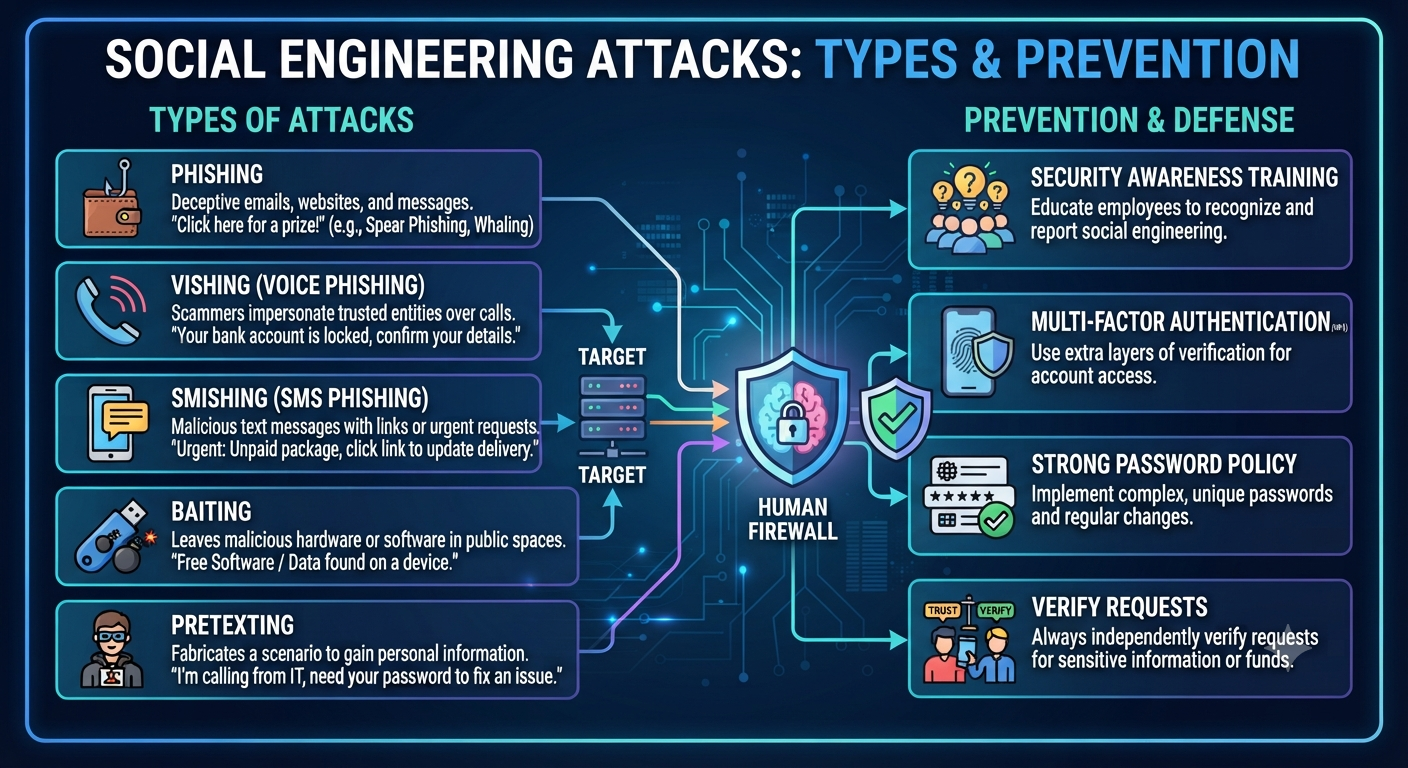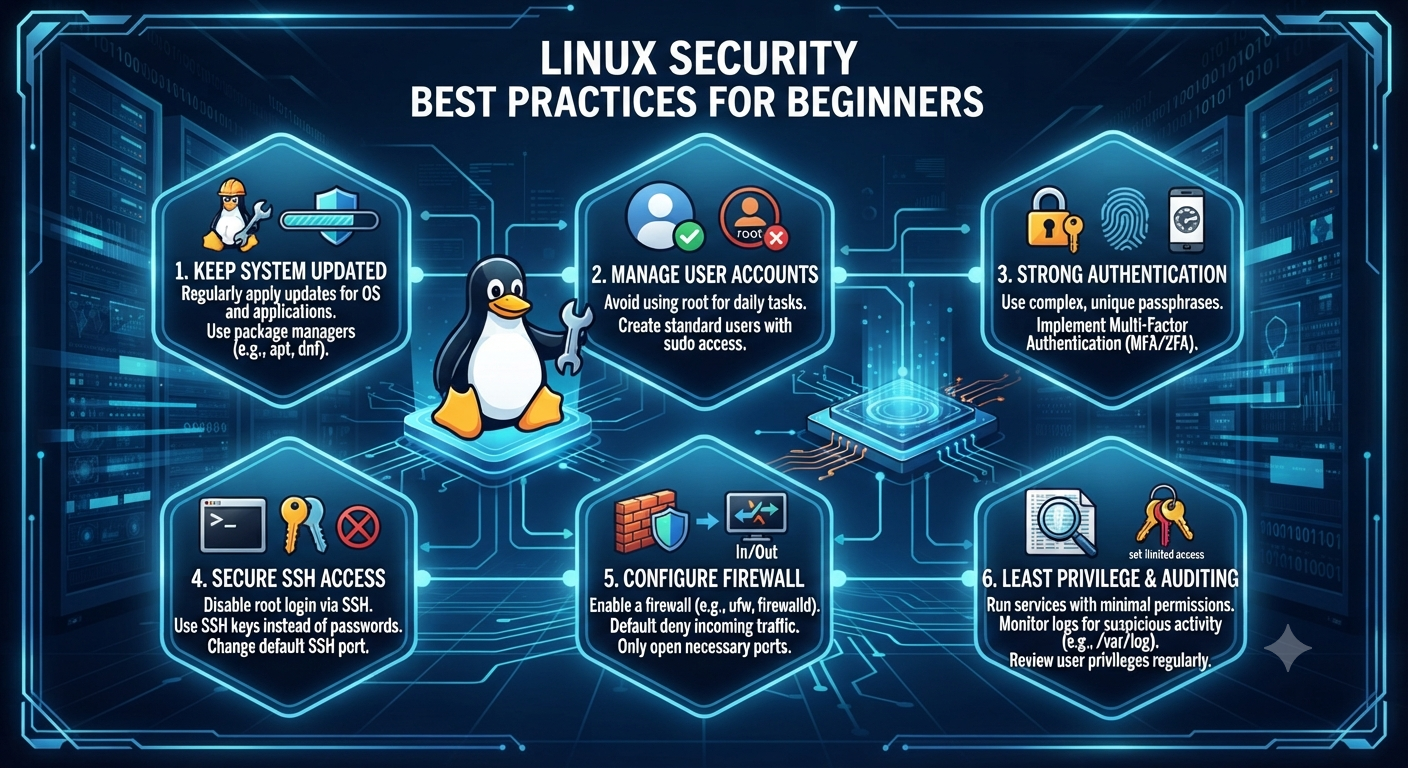
Social Engineering Attacks: Types and Prevention 5 Social engineering is one of the most dangerous cybersecurity threats facing individuals and organizations today. Unlike traditional cyberattacks that focus on exploiting software vulnerabilities or network weaknesses, social engineering attacks target the human element. Cybercriminals manipulate emotions, exploit trust, and deceive people into revealing sensitive information or performing actions that compromise security. As technology continues to evolve, attackers have become increasingly sophisticated in their methods. They no longer rely solely on technical hacking techniques; instead, they exploit psychological principles such as fear, urgency, curiosity, authority, and trust. A single employee clicking on a malicious link or sharing confidential information can lead to data breaches, financial losses, identity theft, or ransomware attacks. Whether you are an individual, a business owner, or an IT professional, understanding how social engineering works is essential for protecting sensitive information. This guide explores the different types of social engineering attacks, how they operate, and the best practices to prevent them. What Is Social Engineering? Social engineering is a cyberattack technique in which attackers manipulate people into revealing confidential information or performing actions that benefit the attacker. Instead of breaking into systems through technical vulnerabilities, social engineers exploit human psychology. They persuade victims to disclose passwords, banking information, personal details, or company secrets without realizing they are being deceived. These attacks can occur through emails, phone calls, text messages, social media platforms, or even face-to-face interactions. Some common objectives of social engineering attacks include: Stealing login credentials Accessing confidential company data Financial fraud Identity theft Installing malware Bypassing organizational security controls Because these attacks target people rather than technology, even organizations with strong cybersecurity infrastructure can become victims if employees are not properly trained. Why Are Social Engineering Attacks So Effective? Cybercriminals understand human behavior remarkably well. Rather than attempting to crack strong passwords or bypass firewalls, they convince people to willingly hand over sensitive information. Social engineering attacks succeed because they exploit emotions such as: Fear Trust Curiosity Sympathy Greed Urgency For example, an email claiming that your bank account has been locked may pressure you into clicking a malicious link without verifying its authenticity. Similarly, an attacker pretending to be a company executive may convince an employee to transfer money or share confidential files. Common Types of Social Engineering Attacks 1. Phishing 6 Phishing is the most common form of social engineering. Attackers send fraudulent emails that appear to come from trusted organizations such as banks, online services, or employers. These emails often encourage victims to: Click malicious links Download infected attachments Enter login credentials Verify payment information Example A user receives an email claiming to be from Microsoft stating that their account will be suspended unless they verify their password immediately. The link directs them to a fake login page designed to steal credentials. 2. Spear Phishing Unlike regular phishing, spear phishing targets a specific individual or organization. Attackers spend time researching their victims using LinkedIn, Facebook, company websites, or leaked databases before launching personalized attacks. Because these emails include accurate names, job titles, or company information, they appear much more legitimate. 3. Whaling Whaling is a specialized phishing attack aimed at executives, CEOs, CFOs, or senior management. These attacks typically involve requests for: Wire transfers Confidential reports Employee payroll data Financial records Since executives often have access to highly sensitive information, they are valuable targets. 4. Vishing (Voice Phishing) Vishing uses telephone calls instead of emails. Attackers impersonate: Bank representatives Government officials Technical support staff Law enforcement agencies They pressure victims into revealing: Credit card numbers Banking credentials One-time passwords Personal identification information 5. Smishing (SMS Phishing) Smishing attacks are delivered through text messages. Victims receive messages claiming: A package is waiting for delivery Their bank account is locked They have won a prize Immediate payment is required These messages typically contain malicious links that steal information or install malware. 6. Pretexting Pretexting involves creating a believable story to obtain confidential information. For example, an attacker may pretend to be: An HR representative An IT administrator A bank employee A government officer The attacker carefully builds trust before requesting sensitive information. 7. Baiting Baiting lures victims with attractive offers. Examples include: Free software downloads Gift cards USB drives left in public places Free movies or games Once accessed, these files often install malware. 8. Tailgating (Piggybacking) Tailgating is a physical social engineering attack. An unauthorized person follows an employee through a secured entrance without using proper credentials. Example: Someone carrying boxes asks an employee to hold the security door open, gaining access to restricted areas. 9. Quid Pro Quo In this attack, criminals promise something valuable in exchange for information. Examples include: Free technical support Software activation Gift vouchers Exclusive services Victims unknowingly provide login credentials or sensitive data. Warning Signs of Social Engineering Many attacks share common warning signs. Be cautious if you notice: Urgent requests requiring immediate action Unexpected emails requesting passwords Poor grammar or spelling mistakes Suspicious attachments Unknown phone numbers requesting confidential information Links that don’t match official websites Requests to bypass normal procedures If something feels unusual, verify it before taking action. Real-World Impact of Social Engineering Social engineering attacks have caused some of the largest cybersecurity incidents worldwide. Their consequences include: Financial losses Identity theft Data breaches Ransomware infections Business disruption Reputation damage Regulatory penalties A single successful phishing email can compromise an entire organization’s network. Best Practices to Prevent Social Engineering Attacks 5 Preventing social engineering requires both technology and user awareness. 1. Security Awareness Training Regular employee training helps users recognize suspicious emails, fake websites, and scam phone calls. Organizations should conduct phishing simulations to improve awareness. 2. Verify Every Request Never trust unexpected requests involving: Passwords Financial transactions Personal information Sensitive documents Always verify requests through official communication channels. 3. Enable Multi-Factor Authentication (MFA) MFA significantly reduces the impact of stolen passwords. Even if attackers obtain login credentials, they cannot easily access accounts without the second authentication factor. 4. Use Strong Passwords Every account should have: